With limited space for green areas, London boroughs Camden and Islington worked together on a skills and capacity building project to better equip the councils in delivering highway green infrastructure at scale and target areas of greatest need.
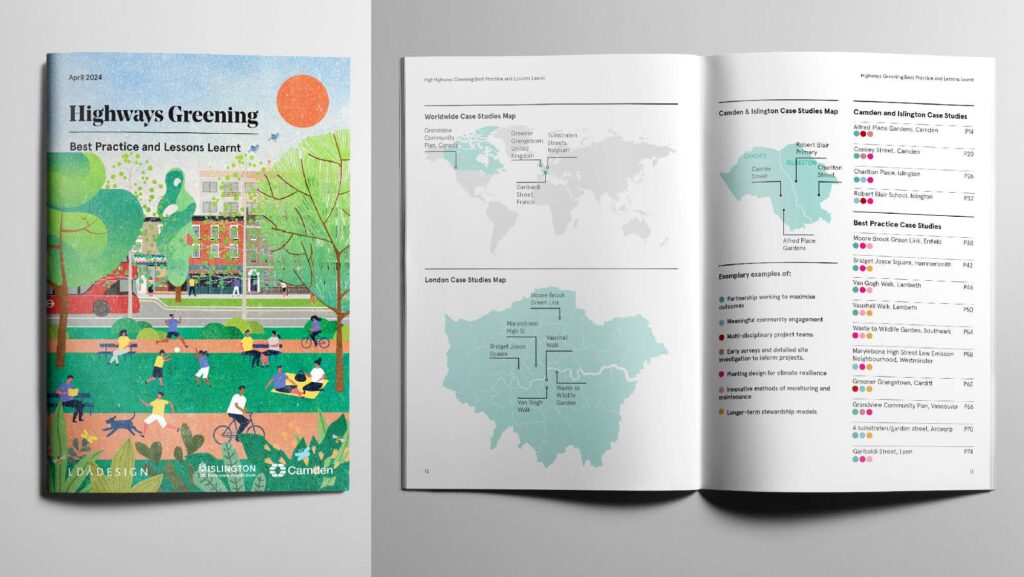
The Highways Greening Accelerator (HGA) was a two-year partnership between Camden and Islington Councils, as part of the Future Parks Accelerator programme. With space for traditional green areas limited in these densely populated inner London boroughs, the project sought to improve councils’ skills and capacity to deliver green infrastructure along highways.
Focusing on the internal processes of the two councils, specifically on how they plan, deliver, and maintain new green infrastructure, the HGA aimed to deliver, among other objectives:
- In-house training and development – a year-long programme for council officers in highways greening to address skills gaps identified from over 100 survey responses, culminating in a practical guidance document
- Green infrastructure mapping tool – a review of the councils’ green infrastructure mapping data and internal processes, and how these interact with decision making, to inform data-led, evidence-based decisions on where new green infrastructure would have the greatest impact
- Cross-authority learning – capturing and sharing lessons from a range of greening schemes across London, the UK, and abroad.
To understand the benefits and challenges of this cross-borough project, we spoke with project leads Joe Lewis from Camden Council and Maddy Gunn from Islington Council.
How did Camden and Islington come together for this project?
 Camden and Islington are neighbouring boroughs with many of the same challenges. We are both highly urbanised, with areas lacking in green space and nature access. Many pockets of our boroughs are also vulnerable to extreme weather events like surface water flooding and urban heat, which can be dangerous for vulnerable residents. Recognising these shared issues, we have developed a long-standing collaborative relationship. Our Parks for Health initiative, which redefined parks as public health assets, was a key example of this partnership.
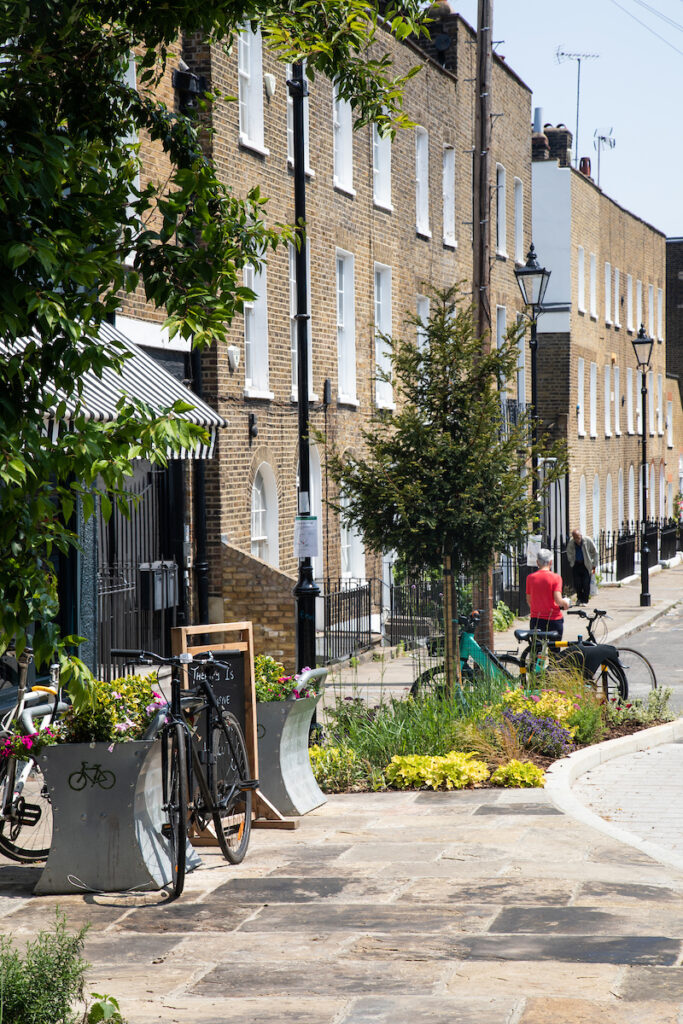
The idea for the HGA came from our desire to integrate more green infrastructure into public spaces, particularly streets, which make up 80% of the public realm. Together, we explored innovative ways to use highways land to address the unequal distribution of green space and the growing need for climate resilience in our boroughs.
What lessons from Parks for Health informed your approach to HGA?
One of the biggest takeaways was ensuring senior leadership buy-in. Having directors and senior representatives at board level gave the project credibility and helped resolve challenges more easily. This strong mandate for change allowed different council departments to work together effectively.
How did the councils benefit from collaborating?
The HGA project drew on expertise from both councils, with input from a wide range of departments and external consultants. As lead officers, we acted as the main liaisons within our respective boroughs, and the unique understanding we each had of our council’s internal processes were helpful in facilitating internal communications with other departments.
The project also facilitated new relationships between officers in both councils. Officers who engaged in the training programme found it beneficial to meet with counterparts in the other borough to discuss shared challenges and opportunities.
It was valuable to see how the other borough operated and learn from each other’s approaches. The differences in our political contexts, funding mechanisms, and delivery structures were as useful to the project as our similarities, helping us think beyond ‘business as usual,’ and identify areas for improvement.
What were the key challenges you faced?
Reaching a wider audience within the councils was difficult. We wanted to engage colleagues across different departments, especially highways and transport, but getting their attention was tricky as they were often occupied with ongoing projects. Working together allowed us to refine our engagement strategies, ensuring the project was tailored to their needs.
Internal procurement processes posed another challenge to meeting the funding’s delivery timetable. However, close collaboration between the councils, especially in developing briefs and tendering, helped us streamline the process. Governance and sign-off procedures also differed between Camden and Islington, so we had to plan carefully to avoid delays.
Any advice for others embarking on a similar project?
If we could do it again, we would establish a cross-departmental steering group from the outset. This would ensure broader support and streamline internal communications. Early buy-in from senior leadership is crucial for maintaining momentum and securing internal support.
We would recommend thinking early about how the project outputs will be applied. Aligning trial work with live projects helps ensure continuation of the work into real life once the funded part of the project ends.
Encouraging interaction between officers from both councils is important too. Providing opportunities for them to meet, discuss and learn from each other helps with forging stronger working relationships and enabling more effective cross-borough collaboration.
We would also recommend working with partners who have a good understanding and experience of working with the public sector. This was key to the smooth working with our training partner, UDL, who could tailor and perfectly pitch its content to officers based on its understanding of the challenges they face and the way that different internal departments run.
What’s next for the Camden-Islington partnership?
We will continue collaborating on the green infrastructure mapping tool, refining it based on joint feedback. We are also sharing our learnings through national webinars, so other boroughs can benefit.
Looking ahead, we will apply the standards and guidance developed through HGA to major highways projects along the borough boundary. We are also feeding into the planning phase of the Nature Towns and Cities project led by the National Trust and Natural England, and funded by the National Heritage Lottery Fund, to help councils and community organisations bring nature into every neighbourhood.
The HGA programme has produced guidance and case studies that can benefit any local authority seeking to improve its approach to green infrastructure on highways. Funded by the Ministry of Housing, Communities and Local Government, the National Trust, and the National Lottery Heritage Fund, and supported by the Greater London Authority, the project offers a blueprint for other councils looking to create climate-resilient streets.

The programme and guidance documents will help to unlock the potential within the council for delivering excellent, multi-functional, climate resilient streets, and address the multiple challenges we face as a borough and city from a changing climate.
Adam Harrison
Cabinet Member for a Sustainable Camden
It was great to have presentations by experts in SuDS, planting design, and green infrastructure. The site visits to other London boroughs really helped us reflect on what we are currently doing.
Richard Walter
Camden Transport Design Engineer
Contacts
Joe Lewis
Green Space Development Manager
Joe.lewis@camden.gov.uk
Maddy Gunn
Greening the Highway Project Manager
Maddy.gunn@islington.gov.uk