The restoration of Gallions Lake highlights the impact and importance of collaboration and community engagement in creating healthier, sustainable urban spaces. Peabody and its collaborators successfully integrated ecological restoration with community involvement, helping to raise awareness and deepen residents’ connection to their surrounding natural environment.
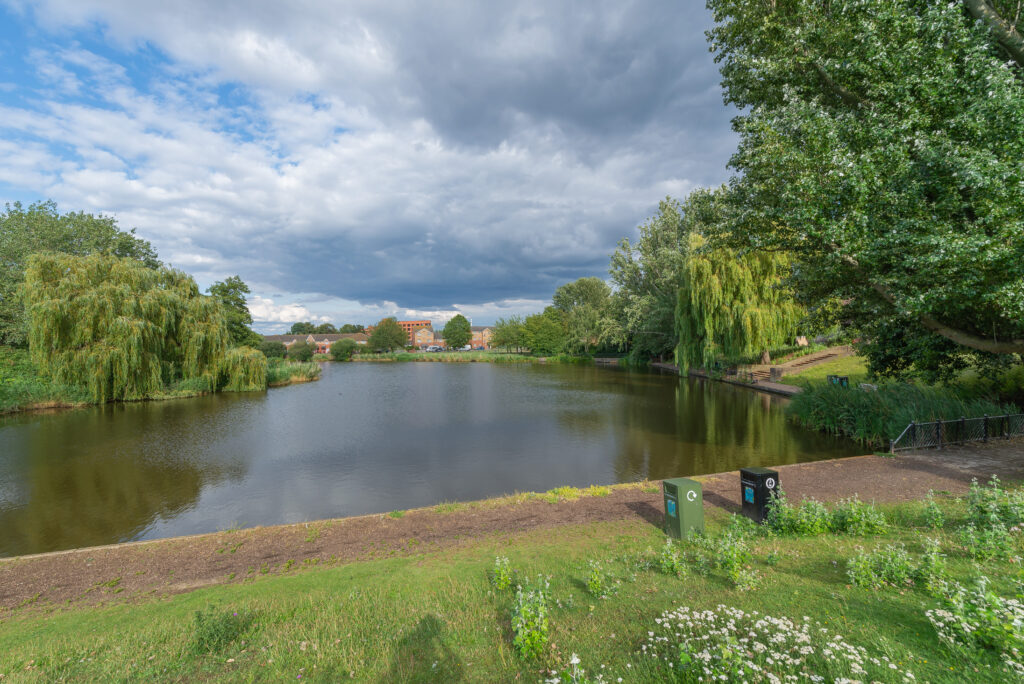
Peabody is a custodian of five lakes and seven kilometres of canals in Thamesmead including Gallions Lake, which had long suffered from pollution and silt build-up. The lake, popular with anglers, was compromised by chemicals such as nitrates and phosphates entering through surface runoff, leading to poor water quality and harmful algal blooms.
Guided by its Green Infrastructure Strategy and Biodiversity Action Plan, which focus on enhancing natural spaces and create healthier and more social places, Peabody formed a collaborative partnership to restore the lake.
With the environmental charity Thames21 and the Environment Agency, Peabody embarked on a £160,000 project between 2023 and 2024 to improve water quality, create new wildlife habitats, and deliver social benefits for the local community at the site. The Marsh Dykes and Thamesmead Catchment Partnership (MDTCP), established to improve local water quality, also supported this effort. By drawing on the expertise of its members, the team devised innovative and cost-effective ecological solutions while keeping community engagement at the forefront.
Ecological restoration through natural solutions
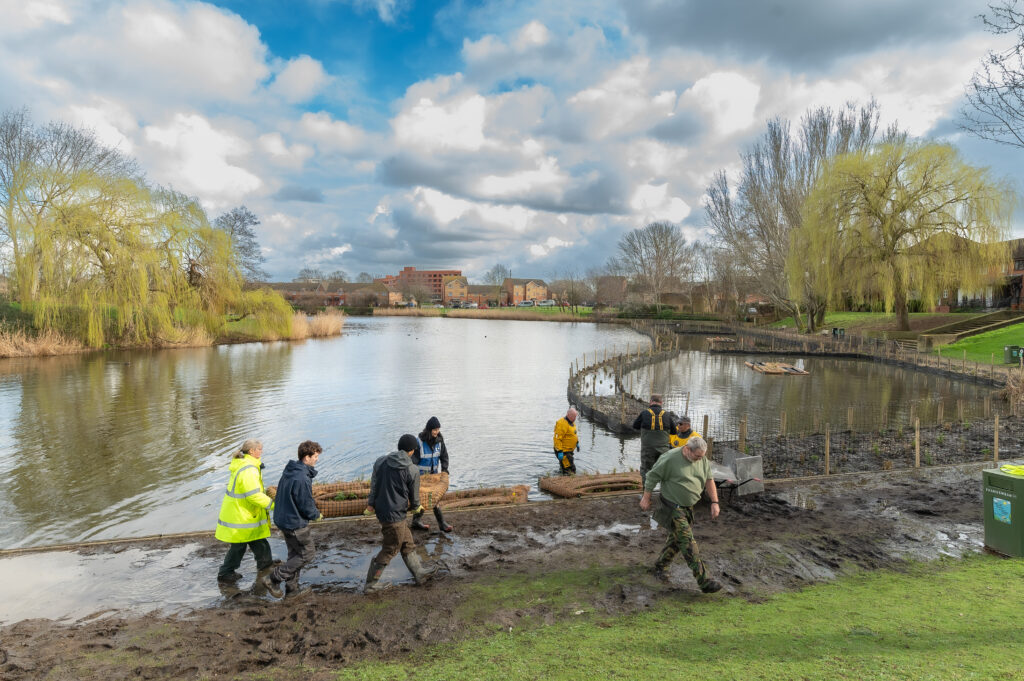
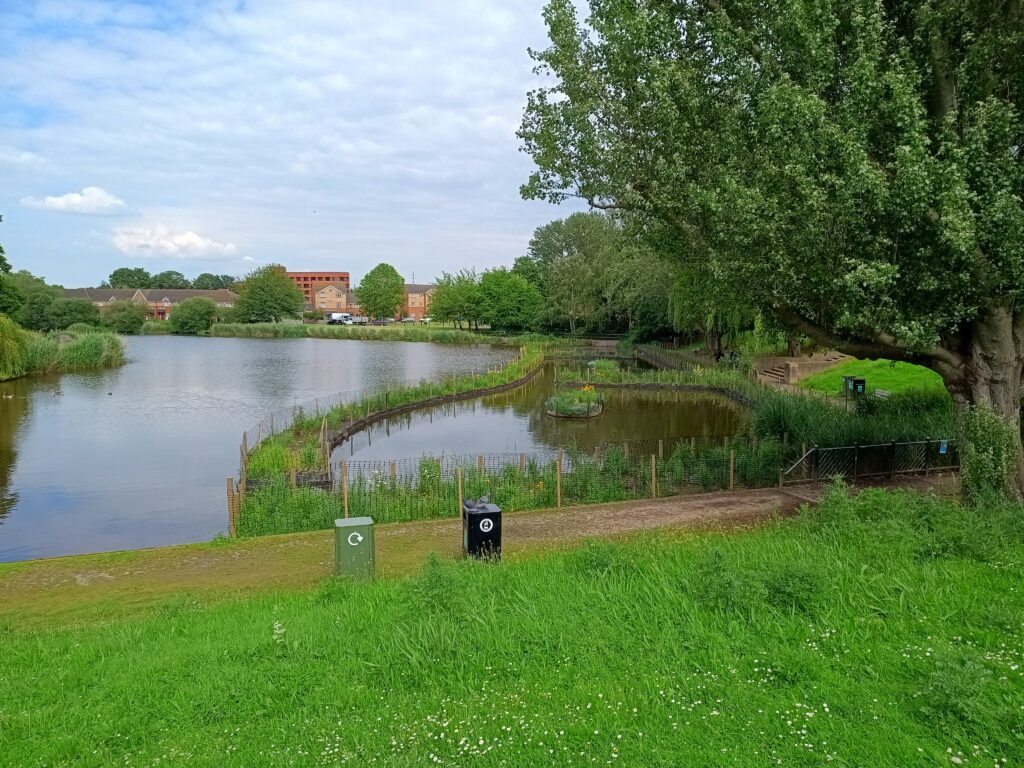
To tackle the water pollution, the team came up with a cost-saving solution: a natural filtration system at the lake’s inlet using an interconnected series of three pools. These pools, shaped by large revetments made from silt dredged from the lakebed, slow the flow of surface runoff and capture suspended solids and pollutants before they can enter the lake. The revetments were planted with fast-growing, resilient species that not only enhance biodiversity, but also help filter out harmful nitrates and phosphates.
The resulting 2,500 m² urban wetland also includes two floating islands, planted with help from the locals. The islands’ submerged roots provide a vital habitat for aquatic life while also contributing to water purification.
In addition to the wetlands, 2,000 m² of neighbouring parkland was transformed by planting native meadows, further boosting the area’s biodiversity and improving the overall ecological health of the blue and green space.
Community engagement and education
From the outset, Peabody and Thames21 focused on involving the community in the restoration process. They worked together to create an engagement plan that informed local stakeholders, including residents, anglers, school groups, and park users, about the project’s goals and invited them to participate in the process.
Engagement methods included surveys, door-to-door questionnaires, and letter drops to explain the project and gather feedback. Initial responses showed that while locals had a positive connection to the lake, there was a misconception that the lake was clean due to its green appearance, when in fact, pollution was a significant issue. Educating the community about these challenges became a delicate yet essential part of the engagement strategy.
Community involvement was further encouraged through events where residents could help mark out areas for meadow planting, select plants for the floating islands, and participate in planting activities. Walking tours and citizen science opportunities, such as water quality sampling, were also offered to deepen the community’s understanding of the lake’s restoration.
Success factors and challenges
The success of the project at Gallions Lake relied heavily on the expertise of its partners. Thames21 brought invaluable experience in improving water systems and connecting communities with waterways, while also helping secure additional funding. The Environment Agency provided both financial support and expert advice on water quality, fisheries, and conservation. The MDTCP facilitated collaborative working across the catchment area to maximise environmental, social, and economic benefits.
One early challenge was overcoming initial scepticism from the local angling club, which feared the project might limit fishing activities. However, once the club understood that the restoration aimed to improve water quality and fish health, they became strong supporters of the initiative.
Similarly, a misunderstanding about the wetland system led to complaints from a resident about the ‘terrible’ state of the first pool, which prompted Peabody to explain its function of filtering out pollutants to ensure cleaner water entered the rest of the lake. Clear communication and education became key components of the project to help the community understand the interventions and their long-term benefits.
While the restoration of Gallions Lake has been a significant success, reducing pollutants at their source remains a challenge. The project team, along with the MDTCP, is actively exploring solutions to minimise pollutants entering the lake from runoff. Peabody will continue to work with Thames21 to monitor water quality through regular testing, while the Environment Agency will assist in assessing the health of the fish when necessary.
A key ongoing challenge is engaging hard-to-reach communities in Thamesmead. While the project successfully connected with existing groups, such as the fishing club and local schools, Peabody is committed to build stronger connections with residents who may not have the time or inclination to engage with environmental projects. By continuing to foster community involvement, Peabody hopes to encourage more people to take an active role in caring for the natural spaces around them.
Contact
Peabody for Thamesmead
ThamesmeadNow@peabody.org.uk