The River Rom restoration project, led by Barking and Dagenham Council in partnership with Thames21, successfully reconnected the river to its natural floodplain, creating new wetland habitats and improving flood resilience. The project also provided a valuable research site for studying biodiversity and disease mitigation.
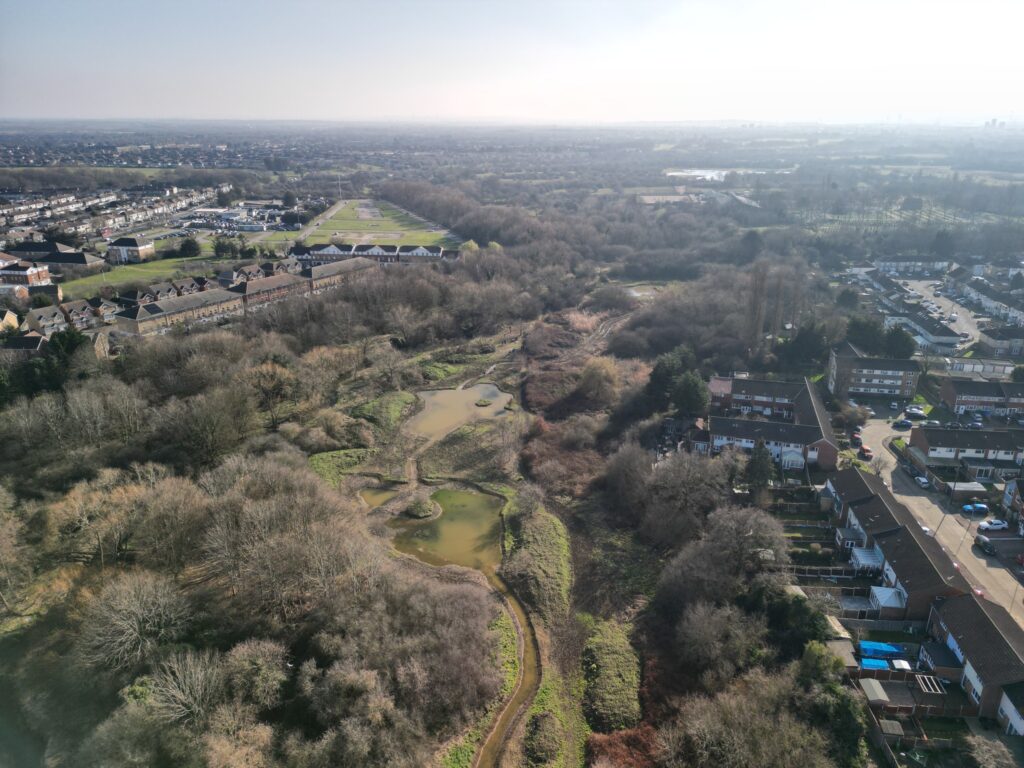
The River Rom, a tributary of the Thames, flows through the east London boroughs of Barking and Dagenham and Havering. In recent years the river’s water quality had deteriorated due to sewage misconnections and overflows, and the dredging and straightening of the river channel has resulted in habitat loss. Further, historic manmade earth mounds in the Chase Local Nature Reserve prevented the river from naturally flooding into its floodplain, hindering its ecological function.
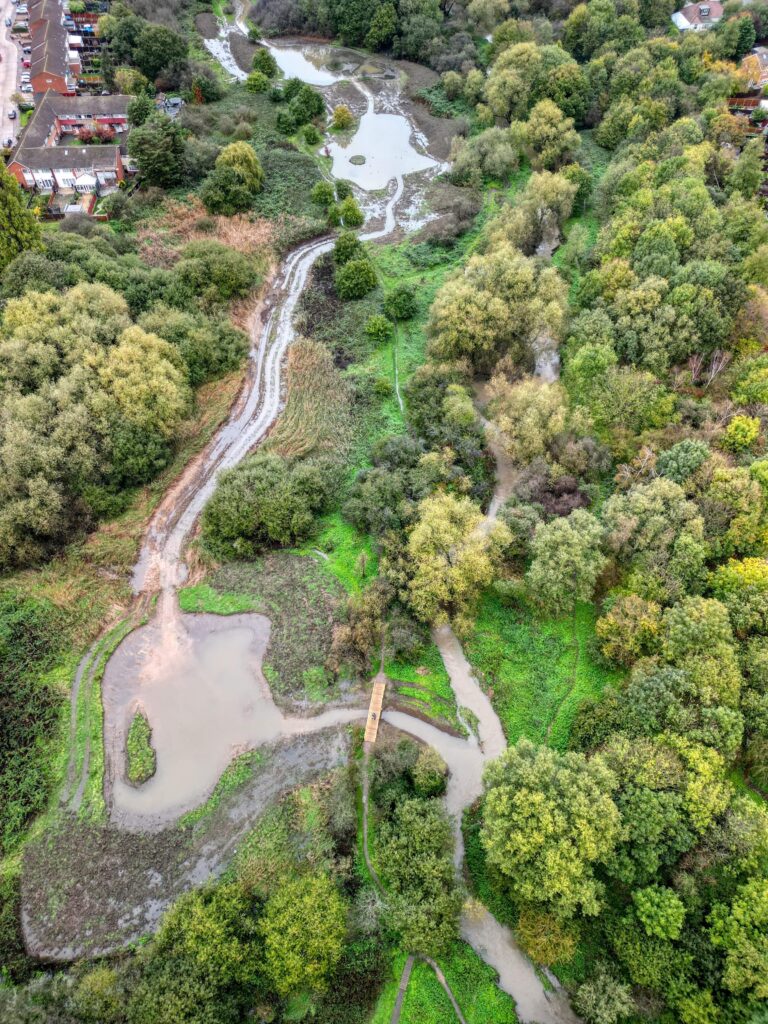
To address these issues, the Barking and Dagenham Ranger Service saw an opportunity to remove these earth mounds, allowing the River Rom to flood its natural floodplain once more. This restoration would not only support aquatic and semi-aquatic wildlife but also improve flood protection for nearby communities by slowing the flow of water downstream and storing it on the floodplain.
Combining expertise
Recognising the complexity of the project, the Council formed a partnership with a range of expert organisations through the Roding, Beam and Ingrebourne Catchment Partnership. This collaborative approach was essential to ensuring the restoration would be successful without causing unintended flood risks or ecological damage.
Thames21, a charity dedicated to improving rivers and waterways, worked alongside the Council to design the project. This combined expertise allowed for the breaching of the earth mounds and the creation of interconnected wetland habitats, enhancing biodiversity and restoring the floodplain’s natural function. The Environment Agency provided vital guidance to ensure the work did not increase the risk of flooding to nearby properties.
Volunteers from the Thames Chase Trust and Eastbrookend Country Park also played a significant role in the project, helping to deliver it on time and within budget. Financial support came from multiple sources, including the Kusuma Trust, the Mayor of London’s Rewild London Fund, and Essex and Suffolk Water, demonstrating the broad support for this ambitious initiative.
Getting the right partner organisations from the start helped make this project both successful and a rewarding experience for all involved.
Informing research
With the restoration of the River Rom’s wetland habitats completed in spring 2023, the project opened up opportunities for research on how biodiversity changes from ‘time zero’ after rewilding interventions.
The partnership expanded to include the European Union’s Horizon Europe BEPREP Project, which aims to collect evidence on how nature restoration targeting biodiversity recovery can serve as a major tool to mitigate disease risk. The project’s research partner, Fondazione Edmund Mach, collected environmental samples from the site, focusing on disease reservoirs and vectors such as mosquitoes and ticks, as well as water and soil quality. These samples were collected four times over a two-year period and will be used to compare with data from 11 other rewilding sites globally to provide valuable insights into the connections between nature restoration and public health.
A successful model
The Rewilding the Rom project has been awarded the UK River Prize, which celebrates the achievements of those working to improve the natural functioning and ecological integrity of the UK’s rivers and catchments.
Following the project’s success, the Council has continued its partnership with Thames21 to clean up and improve the Gores Brook and restore a significant stretch of river currently buried under Parsloes Park in Dagenham, helping to enhance local biodiversity and increase flood resilience in the area.

Through this collaborative effort, we have reconnected the River Rom to its floodplain, developed a wetland, and helped to transform the river into a healthy environment for wildlife, whilst reducing the flood risk for local residents, which is desperately needed in light of the climate emergency.
Together, we have not only restored this reach of the River Rom, but also initiated change to create lasting positive environmental impacts for people and for biodiversity.
Carolina Pinto
River Restoration Manager at Thames21
We’re so pleased this fantastic project has been recognised with the UK River Prize Award. The restoration will benefit the area for years to come thanks to flood risk reduction and an improvement in biodiversity. A huge well done to our Barking and Dagenham Park Rangers, Thames21 and everyone else involved in bringing this fantastic project to life.
Councillor Saima Ashraf
Deputy Leader of Barking and Dagenham Council
Kusuma Trust is happy to have partnered with Thames21 to help restore and rewild the River Rom and to see this extraordinary place become a key natural resource for the local community and all Londoners.
Spokesperson of Kusuma Trust
Contact
Tyler Randall
River Restoration Support Officer
Tyler.randall@thames21.org.uk