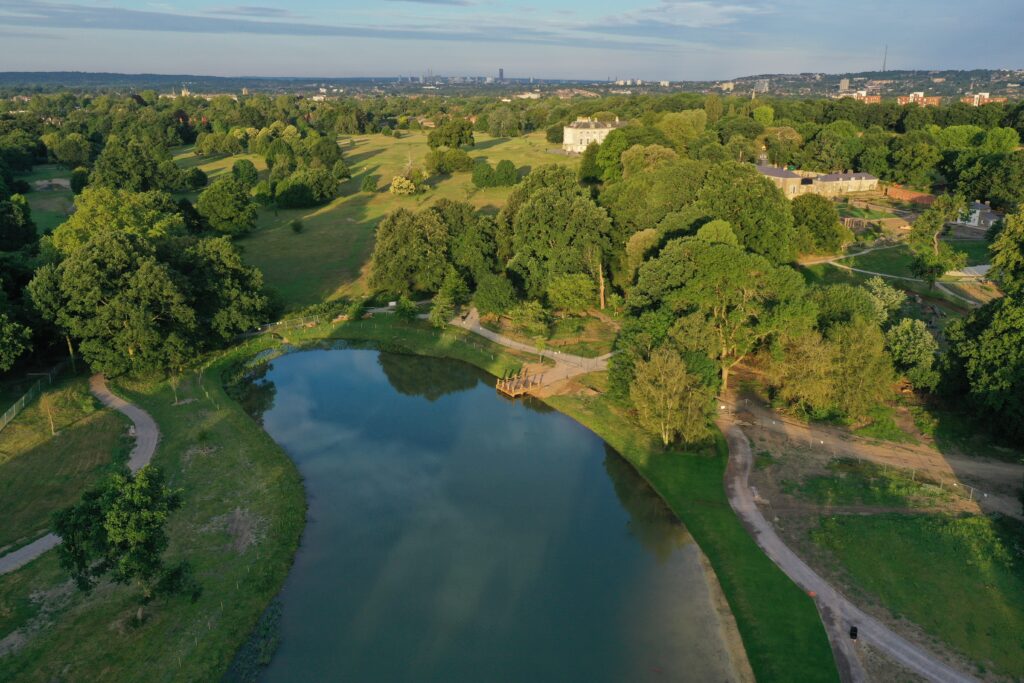
Covering 245 acres, Beckenham Place Park is the largest park in Lewisham, but for over 100 years, it was dominated by a public golf course which covered some 100 acres of the rolling parkland encompassing a series of Georgian listed buildings. However, following an arson attack in 2011 which targeted the park’s empty stable block building, Lewisham Council decided to explore how this historic building, in the middle of the under-utilised public golf course, could be restored and brought into productive use again.
The subsequent investigations showed that despite its size, the park attracted only around 220,000 visits a year and that the demographics of its users were significantly less diverse in terms of age and ethnicity than the park’s catchment area. It was clear that 80 years on from the Council acquiring the park in the 1930s to serve the adjoining Bellingham and Downham housing estates (then under construction), the connection between the park and it supposed beneficiaries was not working. Thus, Lewisham Council, in partnership with the local housing association who manage the surrounding estates, sought to restore the relevance of the park to those who live nearby.
Extensive consultation was then undertaken with residents and park stakeholders to develop a vision for the future use of the space and a plan was developed over several years focusing on restoring the park’s heritage features whilst repurposing them for modern uses. This involved the closure of the loss-making and underused golf course, though there was initially resistance from golfers.
These five principal work areas were identified:
- restoration of the 18th-century Georgian lake as a landscape feature and open water sports use;
- contemporary reinstatement and interpretation of the 18th-century pleasure grounds to include children’s play;
- restoration of the 18th-century stable block to become the main visitor hub for the park with café, toilets, and an education centre for outdoor learning;
- creation of a network of paths to help people explore the space and support a range of activities; and
- transformation of the eastern side of the park to provide flood alleviation, habitat enhancements, and modernised facilities.
The plan would be delivered in three stages, with phase 1 (2018–2019) having completed works on the west side of the park, phase 2 (2023–2024) focusing on the eastern side, and the final phase involving the restoration of the mansion house.
With council budgets under pressure, support was sought from key partners towards the restoration costs. English Heritage gave advice early in the process which prompted a successful bid to the National Lottery Heritage Fund, who awarded a £4.7 million grant that helped support the £3.6 million investment from Lewisham Council.
In recognition of the significant impact the project would have for local people, the Mayor of London made two contributions of £440,000 and £700,000 through Green Capital Grants and the Green and Resilient Spaces Fund respectively. The Environmental Agency also supported the project with a £1.2 million grant to realise the flood attenuation and ecological benefits of the lake and parkland restoration works. And the local volunteer group, Friends of Beckenham Place Park, raised a further £50,000 towards restoring Stumpshill Pond.
Informed by ecology assessments, there was a shift in focus for the management of the wider landscape. Resources that had once been devoted to the maintenance of the golf course, were redirected towards the more horticulturally intensive pleasure grounds where new apprenticeships would be created, and towards better management of the ancient woodlands.
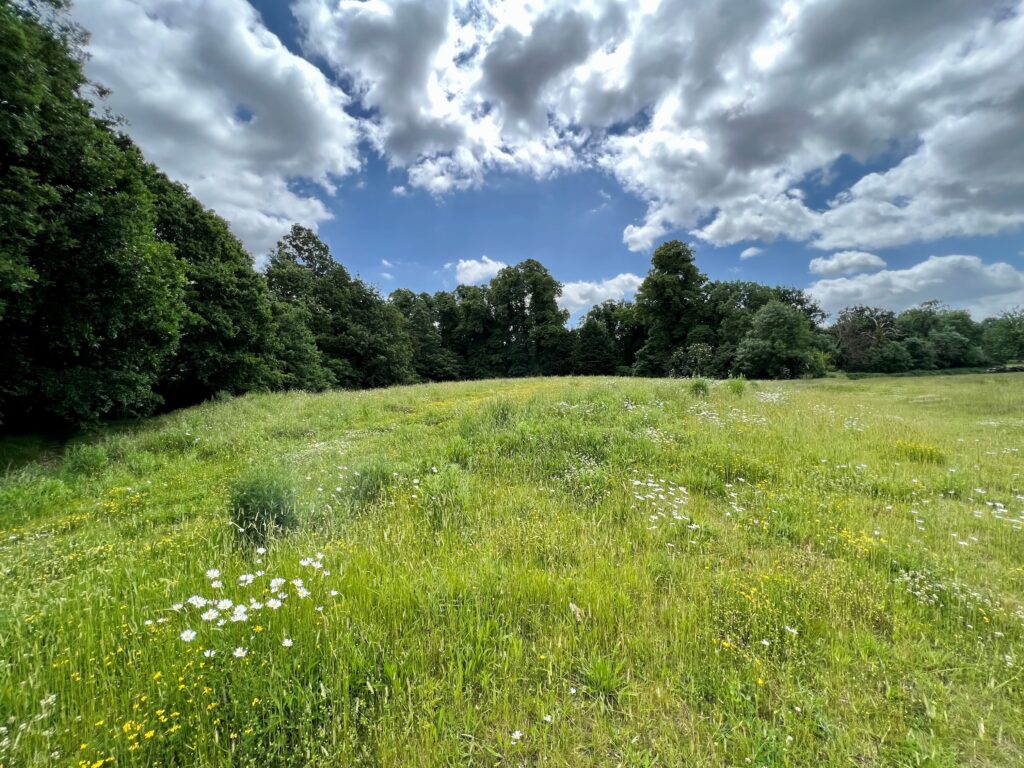
The mowing regime across the former golf course has been relaxed with new areas cultivated and sown as native wildflower meadows. Plans have also been developed to create habitat improvements and flood storage for the river Ravensbourne which runs through the east side of the park.
Over the years, from 2013 up to 2022, the Council has carried out numerous surveys to measure progress. Following completion of phase one of the restoration, visitor numbers and demographics were reviewed in 2022, and results showed a more than five-fold increase in use, with up to 1.2 million annual visits, and that the demographics of users had become closely aligned to the catchment area of the park. It was also heartening to see that compared to 2018 and 2020, considerably higher levels of visitor satisfaction were also recorded in 2022 because of the changes. In the years since the work has been completed, many former golfers now say they understand why the changes were made and how the repurposed space is now much more widely used.
Contact
Vince Buchanan
Head Parks Sports Leisure
vince.Buchanan@lewisham.gov.uk
Gavin Plaskitt
Senior Programme Manager
Gavin.Plaskitt@lewisham.gov.uk