Value of managing green space assets

Read on to find out what is the value of green space asset management, and what Parks for London is doing to encourage its uptake.

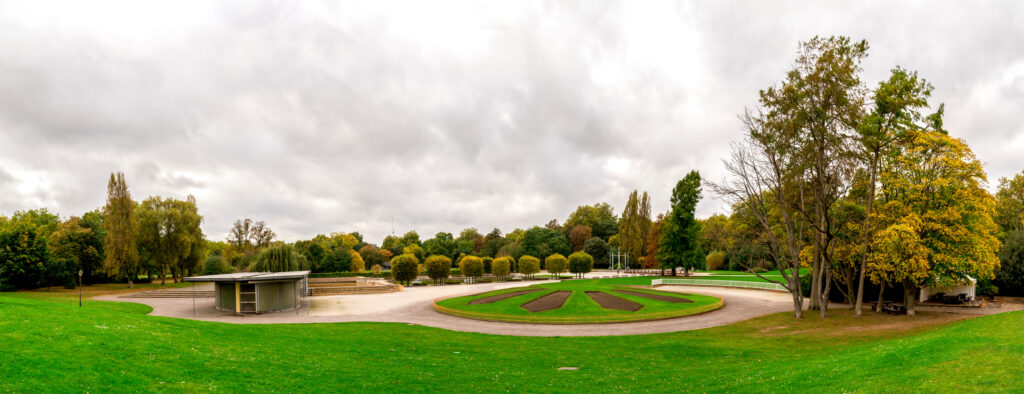
Panoramic view of Battersea Park near Tea Terrace kiosk and public toilets, London, England
Panoramic view of Battersea Park near Tea Terrace kiosk and public toilets, London, England. Image by anastasstyles/Adobe Stock

Realising the multifaceted benefits green spaces contribute to the social, ecological, economic, and physical wellbeing of cities and their residents requires active, ongoing management of these spaces.

To do so, a comprehensive understanding of the type, number, and condition of assets within parks and green spaces is needed. This includes physical assets, such as green and blue infrastructure, buildings, and equipment, as well as intangible assets, such as human capital and financial resources. As such, asset management is a fundamental requirement for any landowner, land manager and park provider.

Yet, asset management goes beyond a periodically reviewed inventory. Instead, asset management is a continuous, fluid process for developing, operating, maintaining, upgrading, and disposing of assets in a cost-effective manner, including all costs, risks, performance, and sustainability attributes.

Asset management for green space is not a process that occurs in a vacuum. Rather, it should underpin decision making and strategic planning. An asset management plan also can be linked with other strategies, such as those related to climate and health, thus strengthening sustainability.

Assets don’t maintain themselves. Asset management planning is essential to providing safe, healthy, accessible, and sustainable green spaces.

Asset management:

  • Informs decision-making, including decisions about investment in human and financial resources.
  • Justifies the need for investment, including risk management, legal compliance.
  • Is essential for budgeting time and human and financial resources.
  • Underpins other issues and local government strategies, such as health and wellbeing, social inclusion and equity, and climate adaptation and mitigation.
  • Supports a strategic, stable pattern of maintenance and investment, and through lifecycle planning helps determine what level of investment to make and when to make it.
  • Addresses assets that need frequent management, such as signage or trail maintenance, as well as assets that require maintenance at longer intervals, such as repainting fences.
  • Helps ensure that assets do not deteriorate to the point that they present a health-and-safety risk.
  • Can lead to quality improvements based on data and evidence, which can help with learning from past experiences, including failures.
  • Improves efficiency, such as for assets that occur in multiple spaces (such as benches and trees).
  • Allows flexibility to accommodate unanticipated events.
  • Fosters a proactive, rather than reactive, approach to managing green spaces.

Although asset management has been applied in other functional areas, it has been slower to be applied to green spaces. In part, three interconnected issues have contributed to this. Local authorities and other landowners often do not have a complete inventory of the assets they own – and you can’t manage what you don’t know you have. Also, a boom/bust approach to investing in green spaces, which are not statutorily mandated, has often been the norm. And an entrenched conceptualisation of green spaces as passive spaces may have contributed to a failure to account for the value these spaces deliver.

Parks for London has been working with London boroughs, housing associations and other landowners to establish asset management objectives. Working with the Green Space Asset Management Action Group, Parks for London has developed a framework for asset management which includes policy, strategy, and programmes. Elements of the framework can be adapted to landowners’ organisational structures, processes, and procedures. Such a flexible approach is essential, as the success of asset management depends on tailoring it to meet local context.


—Dr Meredith Whitten (@urbanparksgirl)

We only use strictly necessary cookies, cookies that are required for the operation of our website. Carry on browsing if you're happy with this, or find out how to manage cookies on our Cookie Policy page.