Wandsworth Park is a highly popular park on the south bank, with multiple areas of amenity grassland great for recreation and sports; a playground; mini golf; and a heritage tree avenue which provides a dark space for bats, birds, and other wildlife.
The park has become increasingly popular since the pandemic, highlighting not only the importance of connecting people with nature but also the need to ensure that habitats in this Grade II listed heritage park can withstand additional human pressures.
Wandsworth’s recently published Biodiversity Strategy forms one strand of their wider response to the Climate Emergency within the borough. It provides vital guidance for Enable Leisure and Culture (a social enterprise managing leisure, sports, arts, and cultural services for the borough) on the creation of biodiversity rich habitats that are of sufficient quality and quantity so that when joined up, they can provide improved borough-wide resilience.
Enable aims to enhance the biodiversity value of Wandsworth Park by creating new wildflower meadows and diversifying existing ground flora for invertebrates, using sustainable implementation techniques. By improving the quality of existing parcels of land and creating new areas of habitat, resilience to climate change for a range of species can be better supported. Through the creation of more natural landscapes, it is hoped that the project will also benefit the local community by offsetting the impact of urban heat islands.
Implementation
The key activities include:
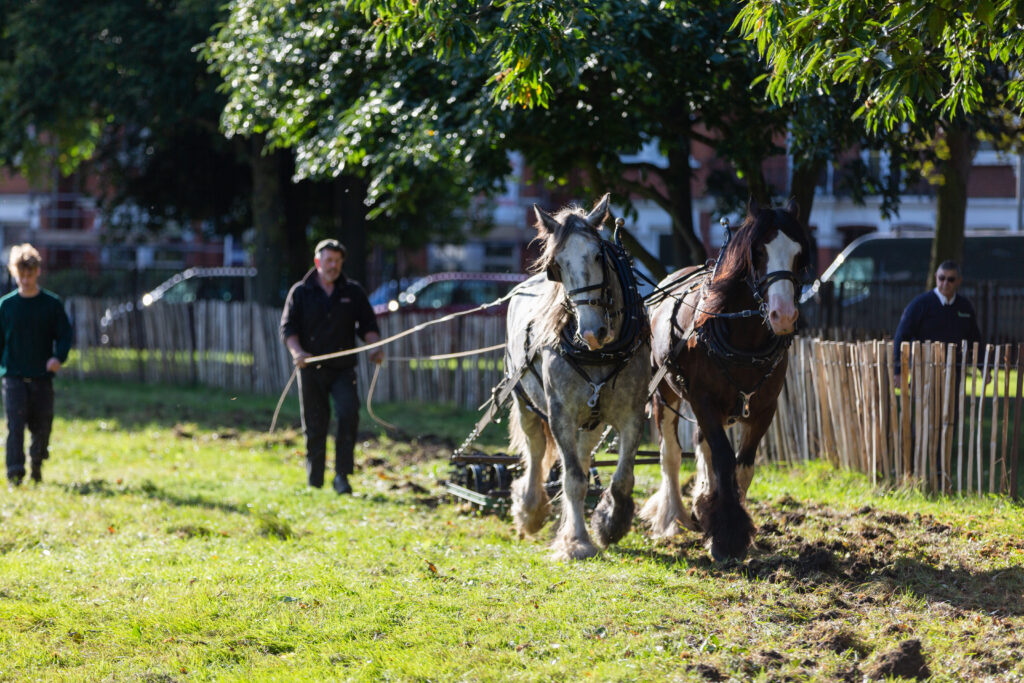
- mowing, raking and rotovating existing amenity grassland, done using Shire horses, reducing the carbon footprint and minimising disturbances to the existing soil and wildlife;
- sowing native grasses and wildflower seeds;
- installing temporary fencing to aid establishment;
- monitoring and removing unwanted vigorous species; and
- keeping meadows well-watered during the establishment period.
A total of 2,500 m² of new species rich grasslands has been created through soil stripping, providing bare soil habitats for invertebrates as well as for planting wildflower and grass species.
The planting palette was guided by advice from Butterfly Conservation to ensure that the project addressed actions for pollinators, also a focus for the biodiversity strategy. These target species include the tawny mining bee, the green woodpecker, and over 20 pollinating butterfly species such as the marbled white, meadow brown, brown argus, ringlet and speckled wood.
The use of Shire horses proved exceptionally popular with local schools and visitors to the park. providing a way for Enable to increase engagement with visitors through a series of informational talks and educational signage.
Additionally, a temporary buffer was formed around the site using chestnut wood paling fences to minimise physical disturbance from the public during habitat establishment.
The site has been carefully monitored by Enable’s Park Operations Teams and managed with the cut and collect method. In September more native wildflower seeds were sown to increase the diversity of the site.
As of March 2022, the meadow is flourishing with a large variety of new flora species thriving in the wildflower meadow. Following the project’s success, Enable has secured further funding to replicate the project at another site in 2022.