Enable Leisure and Culture’s citizen science survey programme in Wandsworth empowers the community to play a vital role in both monitoring biodiversity on Tooting Commons and Wandsworth Common, and informing evidence-based conservation efforts.
Led by Enable’s Citizen Science Officer, the citizen science initiative aims to identify key habitats for wildlife, contribute data to Greenspace Information for Greater London (GiGL), and inform green space management plans to improve habitats.
It also seeks to engage and equip community members with skills in surveying techniques and species identification. Many of the programme’s volunteers, who started with a general interest in local biodiversity and with little experience in surveying, are now capable of supporting different wildlife surveys.
So far, the programme has been regularly monitoring amphibians, bats, reptiles, hedgehogs, plants, and biodiversity within private domestic gardens via their On Your Street survey. The data gathered is used by Enable to advise active management of their green spaces to protect and enhance populations of various species.
Bats and amphibians at two commons
Tooting Commons and Wandsworth Common are key study sites for amphibians and bats respectively.
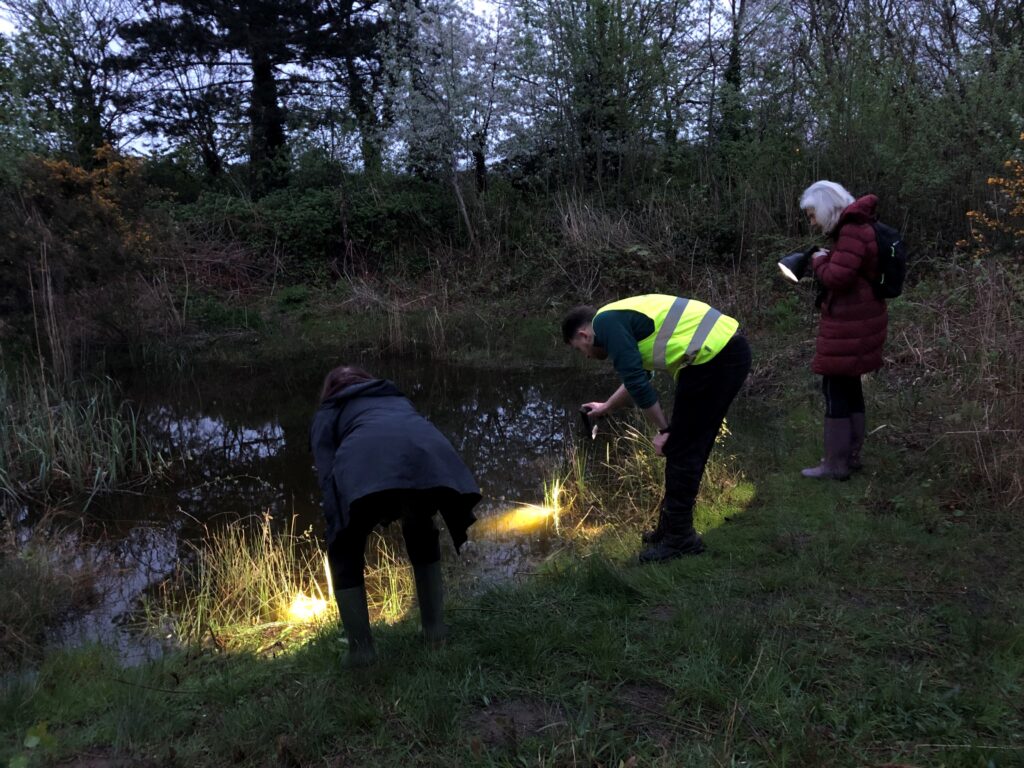
As part of the programme, the Tooting Commons ponds were registered as a survey site for the nationwide amphibian survey, and volunteers were trained in daytime and night-time visual searches, evening torchlight surveys, and using artificial egg strips to detect newt breeding. These surveys are carried out at different times of the year during the breeding seasons of different amphibians, and at night when amphibians are most active.
Enable has established two bat transects on Wandsworth Common, where volunteers use Echo Meter Touch bat detectors to record bat species, location, numbers, and behaviour. These surveys have been highly popular, with both transects walked monthly by the volunteers who have since learnt how to use the survey equipment and the appropriate methods for data collection.
Data-driven habitat improvements
The data gathered has led to significant habitat enhancements. On Tooting Commons, three key ponds were targeted for amphibian habitat maintenance, and ephemeral pools were created to support breeding.
On Wandsworth Common, guidance documents for enhancing bat roosting sites were created, detailing specific tree management practices such as by preserving standing deadwood through monoliths. These targeted efforts aim to improve habitat complexity and connectivity for the long term.
Programme outcomes
To date, the citizen science programme across the two commons has:
- increased volunteer engagement and connection with nature;
- enabled community contributions to local conservation;
- provided over 50 volunteer hours of amphibian surveying and over 140 volunteer hours of bat surveying;
- developed volunteers’ skills in survey techniques, species identification, and data collection;
- encouraged curiosity and better scientific understanding within the community;
- contributed valuable data to national databases, supporting broader conservation efforts;
- directly informed future management practices for these two green spaces; and
- created a rhythm of annual wildlife surveying.
Building support for long-term projects
Engaging the community and stakeholders early is key to building support for biodiversity projects. The local residents, friends groups, and Management Advisory Committees of the two commons played a vital role in the success of amphibian and bat surveys. They were involved from the start and helped to promote the projects and participated in surveys. Enable also already had good buy-in from many participating local residents who previously contributed to improving these habitats and were supportive of the surveys.
Volunteer numbers and enthusiasm can fluctuate. To combat this, there is a programme of social media outreach and regular communication about realistic survey outcomes. For example, the bat transect surveys, which start just prior to sunset and continue late into the night, can be challenging for some volunteers so whilst they are encouraged to start the survey with staff members, they do not have to stay for the full duration of the survey. This approach allows volunteers to participate while accommodating specific needs.
Supporting independent citizen science
In addition to this programme, Enable has assisted volunteers conducting butterfly and stag beetle transects in larger sites and provided support for individuals interested in starting their own surveys. In 2023, Enable organised an event at Wandsworth Common with a local moth recorder, Butterfly Conservation and Friends of Wandsworth Common, to encourage anyone who might be interested in moths to join regular recording sessions.
Through these initiatives, which also include nature walks and talks with schools, Enable continues to deepen the community’s involvement in local biodiversity conservation and fostering a sense of stewardship for Wandsworth’s green spaces.

We’ve offered bat walks for several years, and they’re very popular, but this project from Enable’s Biodiversity Team, which uses volunteers to walk formal transects, has taken engagement with our members to a new level. People are so keen to help, especially when it’s both enjoyable and increases knowledge in aid of nature conservation. It’s been particularly heartening to see young families getting involved, alongside our older members.
Richard Fox and Julia Bott
Co-chairs of The Friends of Wandsworth Common
Contact
Enable Biodiversity Team
biodiversity@enablelc.org
020 3959 0060