Lambeth and Havering Councils have successfully adopted Parks for London’s Green Space Quality Manual within their service as a benchmarking and monitoring tool to maintain and improve the standards of their parks and green spaces.
Well designed and maintained green spaces, are more sustainable and can more effectively cater for users, support biodiversity, and combat the impact of climate change and air pollution. The Green Space Quality Manual was developed to support those who own, manage, design and maintain parks and green spaces in setting, maintaining, and improving quality standards across all types and sizes of green infrastructure. It also provides a framework for monitoring improvements and performance.
Created in collaboration with experienced green space managers, the manual has evolved over time to include a broader range of landscape elements, which are considered across seven key sections in the fourth edition: planting, trees and woodland, grassland, grass sports surfaces, play and sports, infrastructure, as well as water bodies and features.
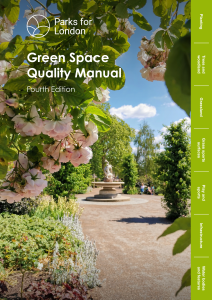
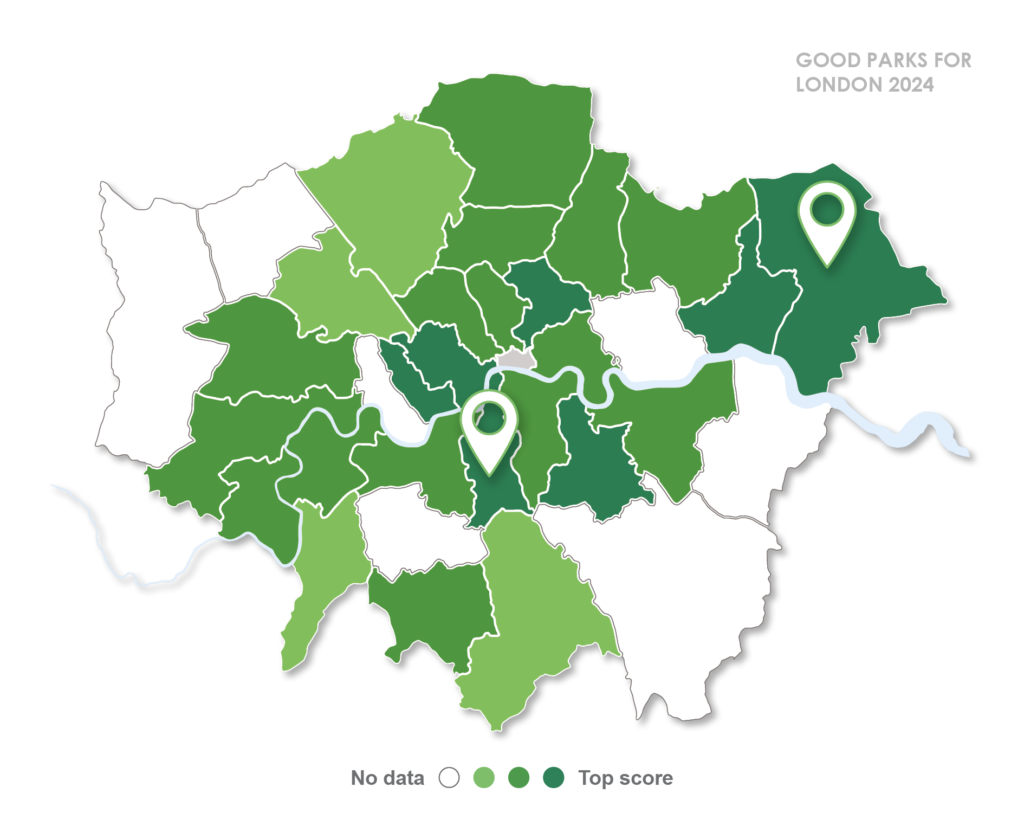
Among the landowners who successfully applied the manual on the ground to improve the quality of their green spaces are the London boroughs of Lambeth and Havering. In Lambeth, the manual provides a consistent benchmark for parks and estates, while in Havering, it forms the basis of a structured and proactive monitoring system.
A tool for consistent benchmarking in Lambeth
Lambeth Council has adopted the Green Space Quality Manual in 2022 as the principal tool for assessing and benchmarking the quality of its parks and open spaces. Previously, park officers assessed parks against outdated grounds maintenance specifications, which made it difficult to grade the quality of green spaces they manage accurately.
Now, Lambeth conducts weekly inspections using the standards derived from the manual to measure quality against and ensure improvements are delivered to desired standards. The implementation of the manual has provided a consistent and comprehensive set of criteria to evaluate its parks.
The Council’s focus is not limited to parks; it is now working with the housing department to extend the use of the manual to housing estates. This would create a consistent quality standard across the entire borough, benefiting residents by enhancing the spaces they live in.
Further supporting quality standards, Lambeth parks officers utilise their on the ground experience of assessing other sites as judges for the Green Flag Award, Green Heritage, and London in Bloom, allowing them to more effectively ensure their sites meet or exceed these award standards and apply insights gleaned from good practice and innovative solutions implemented elsewhere.

The Quality Manual for us has been really important in terms of providing an opportunity to take a step back and assess certain open spaces. The detailed framework enables you to look at every element of the park in a lot more detail than you would normally.
Kevin Crook
Assistant Director Neighbourhoods at Lambeth Council
Monitoring green spaces in Havering
The Green Space Quality Manual has played a crucial role in shaping the Havering’s Parks Standards guide. This guide is the cornerstone of the Council’s parks monitoring system, where park development officers follow a schedule to inspect and record the quality of grounds maintenance and condition of paths, furniture, fencing, and other park infrastructure.
Informed by the manual, the guide provides a graded system to aid officers in assessing the condition of green spaces, assign scores and identify corresponding actions.
| Grade | Standard | Risk level | Actions required |
| A | Good | No risk | No action |
| B | Satisfactory | Low risk | Monitor |
| C | Unsatisfactory (minor concerns) | Medium risk | Appropriate action within available resources and individual site assessment |
| D | Poor (major concerns) | High risk | Immediate action to bring to a satisfactory standard and/or make the area safe |
This system allows Havering to prioritise resources effectively, ensuring that any high-risk areas are dealt with swiftly by the officers or contractors, while low-risk areas are monitored over time.
The visual and descriptive aids in the guide, drawn from the manual and examples from within the borough, help officers identify and address issues in a methodical way. As a ‘live’ document, it evolves with the borough’s needs, incorporating new photos and examples when necessary to ensure relevance.
The frequency of monitoring is dictated by a hierarchy of all council-managed parks and open spaces based on their use, location, and facilities. The top 25 parks are monitored monthly, while other spaces are inspected less frequently, from six-monthly for principal open spaces to a minimum of once a year. This ensures that the borough’s most popular and widely used parks receive the attention they need, while smaller open spaces are monitored periodically to maintain overall safety and quality.
Lambeth and Havering’s use of the Green Space Quality Manual highlights its effectiveness as a tool for assessing green space standards for maintenance and improvement. Both boroughs are setting an example for other London councils, demonstrating how the manual can be a key driver of high-quality green spaces that benefit residents and enhance local biodiversity.