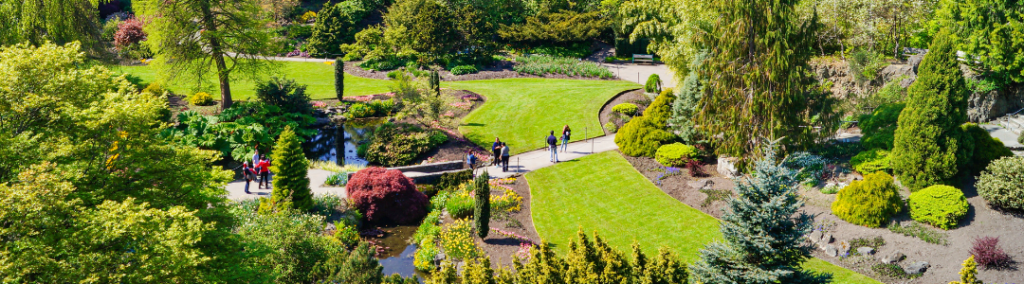
We have recently published the latest fourth edition of our Green Space Quality Manual, a guide for setting, maintaining and improving quality standards across all types of green infrastructure.
Read our Chief Executive Tony Leach’s reflections on why the quality of green spaces matters, and how the new manual can help in this regard.
This article is published in full on our LinkedIn newsletter, Let’s #TalkGreenSpace.
Although the provision of green and blue spaces is important for people, wildlife, and the environment particularly in urban areas, it is equally crucial that these spaces are cared for and maintained to a good standard.
Yet, over the last four decades that I’ve been working in the green space sector, the way parks and green spaces in the UK are being managed and used has been changing due to various factors:
- A decline in revenue funding for public parks and open spaces which has led to reductions and changes in maintenance levels, such as the decrease in annual bedding.
- A greater engagement between the public and landowners regarding the way some green spaces are managed. With that, changes to grassland management, for example, are more widely accepted by the public than in the past.
- The acknowledgment of the need to encourage biodiversity, leading to a phasing out of the use of herbicides and peat, and a rise in the practice of composting green waste on site.
- The understanding that green spaces needing to be safe but not sterile. So, many trees that are felled because of risk of harm are no longer taken to landfill but are often left on site for informal play and to encourage biodiversity.
- A number of policy drivers, which recognise the important role of green infrastructure, nudging adjoining landowners to link up green spaces.
- More frequent extreme weather conditions that are putting extra stress on the landscape, through flooding or drought. As a result, we are seeing more projects that involve de-culverting underground streams and the creating sustainable urban drainage systems.
- The recognition that provision of green spaces is not equal for all. For instance, many women and girls do not find their needs catered in green spaces.
- A loss of skilled staff due to retirement and the challenge of attracting new entrants into the sector.
In this everchanging landscape, with competing demands and resources constraints, it becomes abundantly clear that we cannot carry on doing things the way they’ve always been done. It is time that we look afresh at the outputs that lead to biodiversity enrichment and positive health and wellbeing outcomes for the communities that we serve through all green spaces.
…