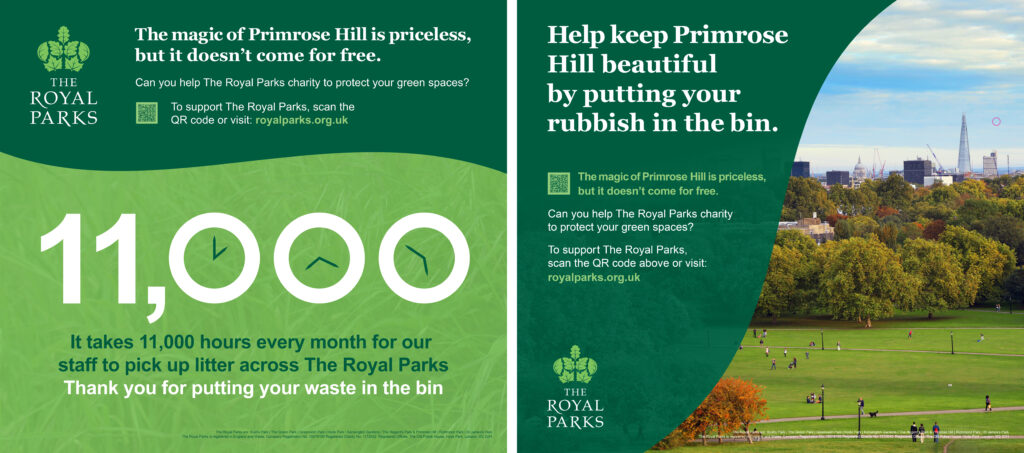
Regents Park and Primrose Hill alone regenerate around 600–830 tonnes of general waste every year, with more waste in the summer than winter. The Scavenge Team performs daily sweeps of the park to collect litter and bin waste via a single four-tonne refuse truck.
The historic bin infrastructure of the park consisted of 236 bins, mainly made up of smaller capacity 100-litre bins that would need backing up with a 1,100-litre wheely bin.
In 2020, The Royal Parks looked to modernise the infrastructure, retaining only the historic cast iron bins in more formal areas of the park. They replaced many of the smaller bins with 38 higher capacity, 1,100-litre housed bins, located strategically at points of high traffic and use. This resulted in a 19.5% increase in capacity to 47,460 litres across the park, whilst reducing the number of bins to just 97.
These changes have resulted in savings in several areas. The previous system used over 120,000 black plastic bags a year, at a cost of approximately £21,6000. In addition, these bin bags, weighing around ten tonnes, would cost a further £1,250 per annum to dispose of. A near 50% reduction in collections accounted for around £10,000 in savings, not to mention the positive environmental impact.
Where previously an additional transit van was required to collect from all bins, the refuse truck could collect from nearly all bins given its bin lift’s compatibility with the 1,100-litre bins. This reduced vehicle movements, collection time, and manual handling and labour by approximately 50%.
The Scavenge Team did not detect an increase in litter since the reduction of bins, even in remote areas. Although they observed rubbish placed where an old bin used to be in the initial stages, the problem resolved itself after a month or so as park goers became used to the new bin locations. Despite experiencing graffiti on some of the new bins, there is now fewer bins that could be subjected to the ongoing issue of graffiti and vandalism in the parks.
During peaks in visitor numbers in summer, when the bins can still experience overspilling, waste is piled in fewer locations than before, and mostly on the main paths that the refuse truck can directly access. The reduction in capture points has also lowered the spread of waste across the park via wind or scavengers.