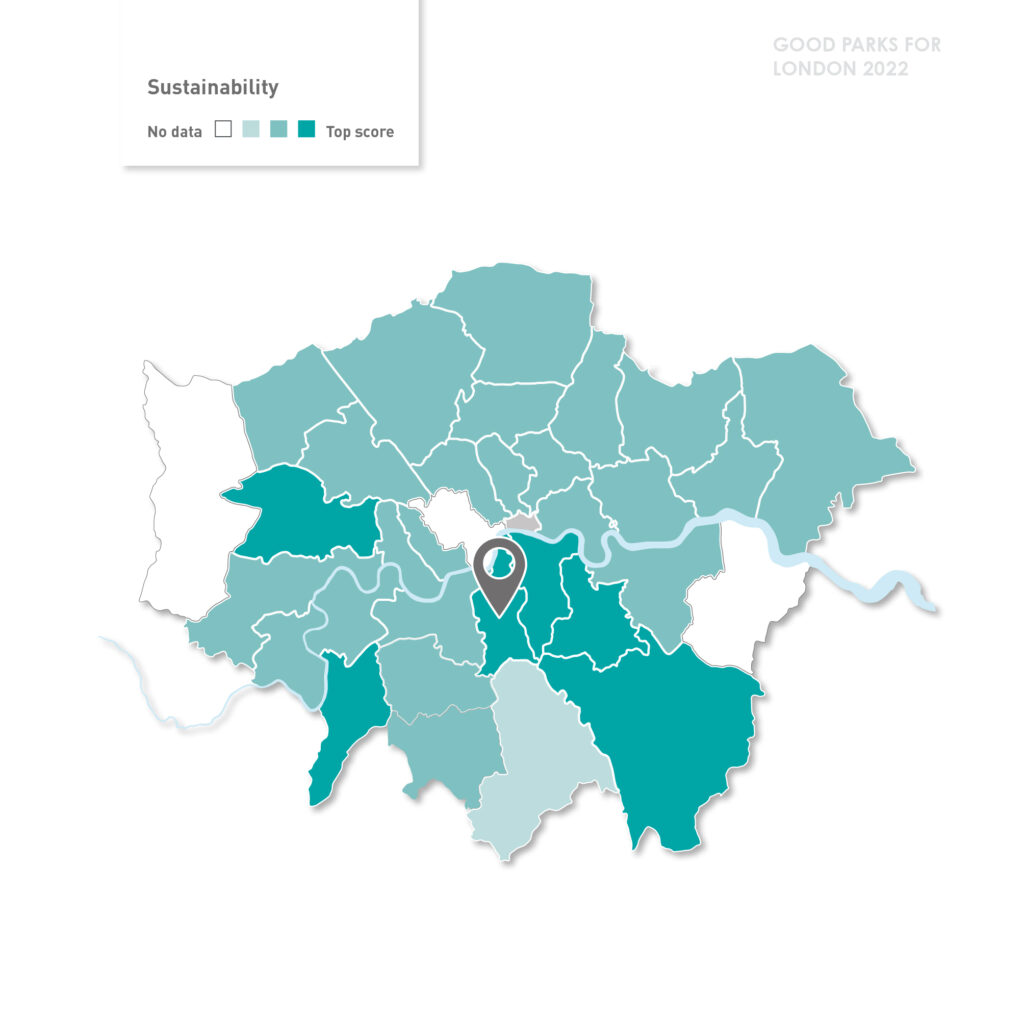
Lambeth has ambitions to be the most sustainable borough in London—something that is evident in the management of their parks and green spaces.
Their Integrated Pest Management Policy, adopted in early 2019, is embedded across all parks operations and fully supported by local councillors, the Lambeth Parks Forum, and wider stakeholder groups. The policy takes a proactive approach to reducing the use of chemicals to a minimum and only in very exceptional circumstances. This approach has also been mirrored across the borough’s streets and housing estates.
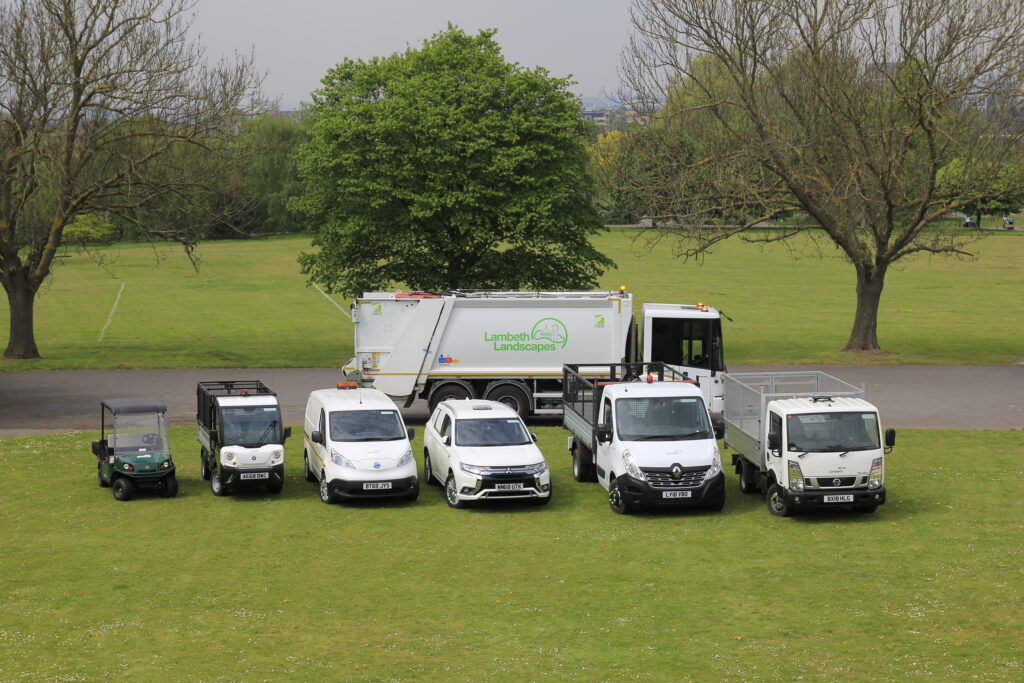
Lambeth’s park service are rightly proud of their green credentials. They operate a fully green fleet (34% of their vehicles are electric or hybrid, and the remainder are Euro 6 compliant diesel vehicles), and all their diesel vehicles (and plant) run on hydrated vegetable oil—reducing net carbon emissions by up to 90%.
Their fleet is monitored with telematics to improve efficiency, highlight sharp braking patterns, idling, and inefficient routes—supporting the reduction of carbon emissions. They have held Logistics UK Van Excellence accreditation for several years and achieved Fleet Operator Recognition Scheme (FORS) Bronze accreditation in 2021, with the target to obtain Silver status in 2022/23.
They are replacing their handheld machinery from petrol to battery powered, which is not only much greener but also has positive health benefits for both users and residents.
Brockwell Hall, within Brockwell Park, was one of the first buildings in the borough to have a ground source heat pump. The heat pump was installed as part of a wider National Lottery Heritage Fund project to restore the Grade II* listed mansion house and its historic features, whilst also making use of modern technology to ensure the building is as green and sustainable as possible.
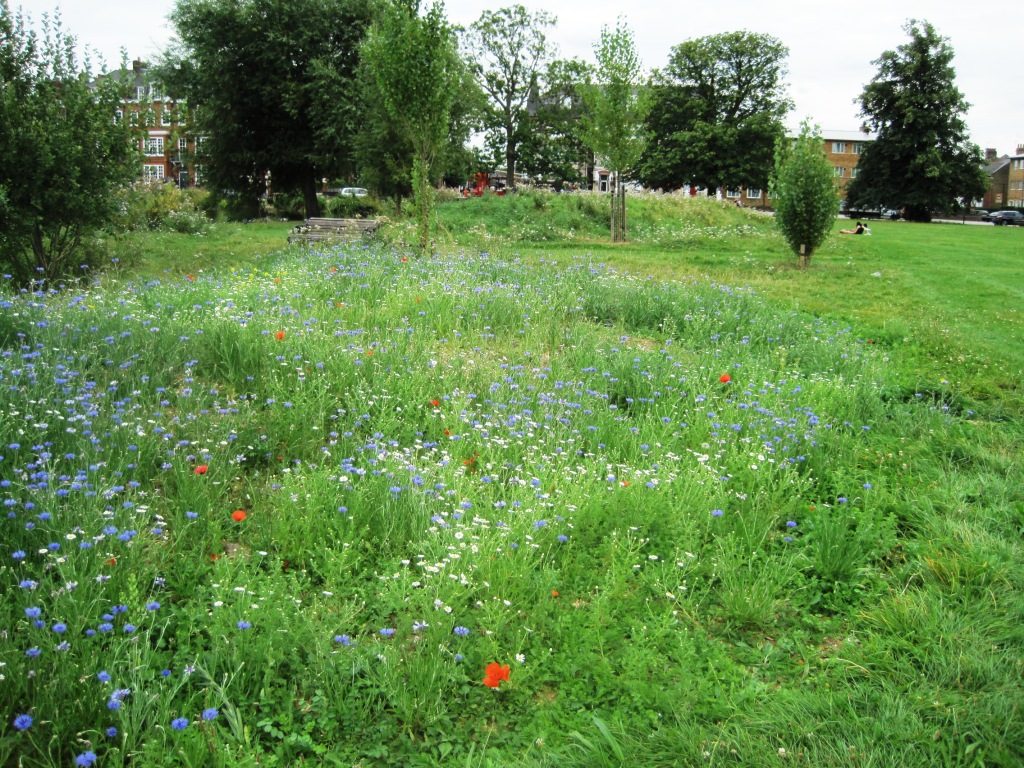
In addition, the Council, with strong support from stakeholders, has started to change the way it manages the borough’s parks and open spaces with relaxed mowing regimes in some form, at most sites, and with some larger open spaces having minimal, if any, mowing whatsoever. This approach helps to support biodiversity and wildlife in the borough.