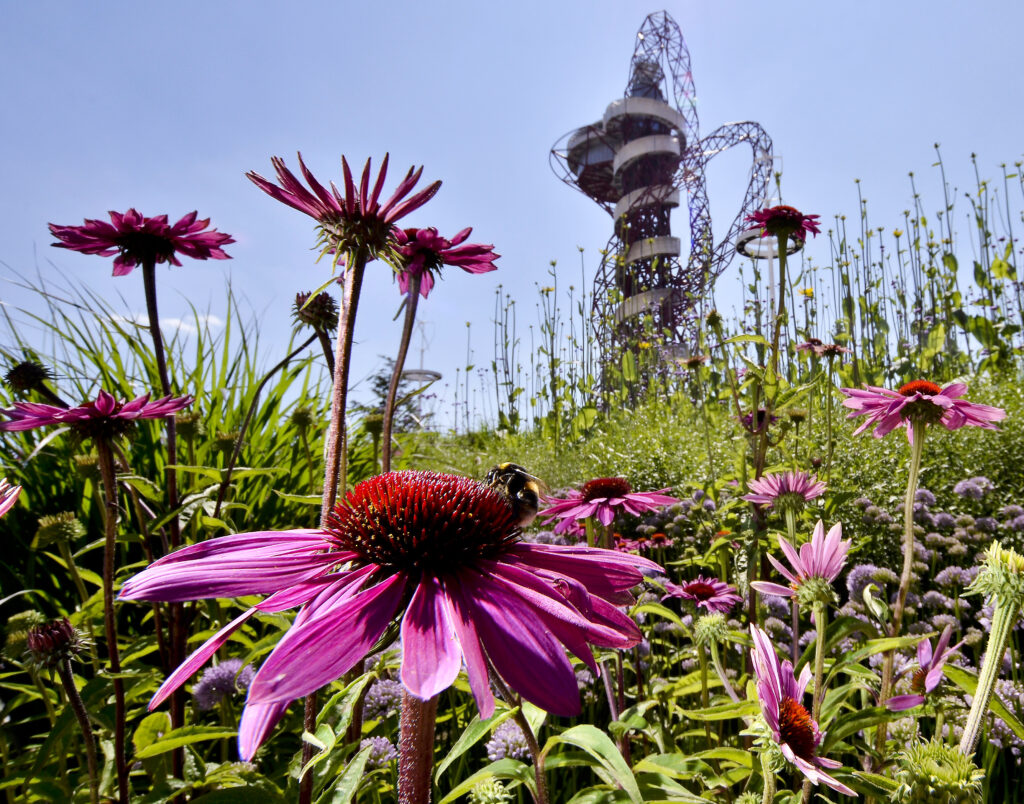
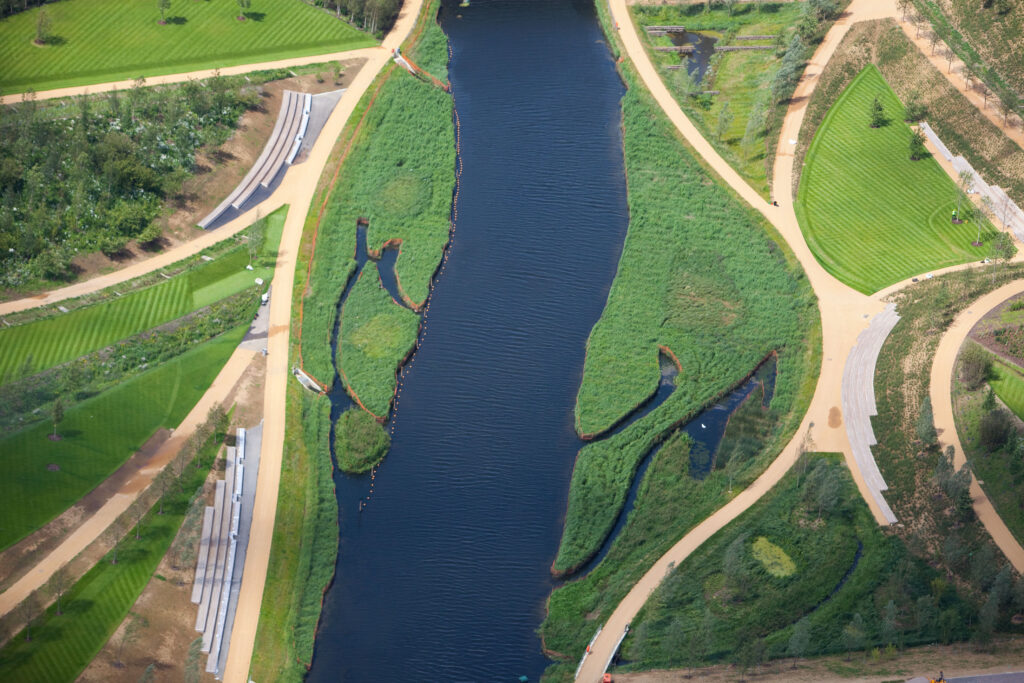
Queen Elizabeth Olympic Park knits a vibrant area of East London into a modern urban destination. Its presence and ongoing regeneration and development has redefined the historically industrial and creative heartlands of Stratford and Hackney Wick into an exciting and sustainable place to live, work, study, play and visit.
Sustainability was a key element of the London 2012 Olympic Games, and it remains a key driving force for the area’s regeneration which has been handled by the London Legacy Development Corporation (LLDC), a mayoral body that contributes to the Mayor of London’s climate emergency response action plan. LLDC’s progress and performance against its sustainability
objectives is reported annually.
Over the last year, the LLDC reviewed its climate emergency response to Queen Elizabeth Olympic Park’s current and future challenges, and opportunities posed by climate change.
Reflecting key areas of priority regarding carbon and climate change, the LLDC developed a trio of evidence bases put together in close consultation with its internal and relevant external stakeholders to give context and propose action relating to:
- the built environment—why, and how to build developments aligned with a 1.5ºC future
- zero carbon mobility—how to better connect people, places, and things on and around the Park
- climate change adaptation and resilience—considering the practicalities of managing the stresses and shocks related to climate change
Few organisations are short of ideas as to how they can improve their sustainability credentials but considering the cost and benefit of these actions is often as far as many projects get.
To support the proposed actions at Queen Elizabeth Olympic Park, LLDC’s management has approved the use of shadow carbon pricing to better consider the true cost of (or value of not) emitting a tonne of carbon. This allows the question how are we going to pay for it? to be seen in the context that when it comes to climate change—as is for most things—prevention is better and much less expensive than cure.
Realising LLDC’s sustainability ambitions will require new ways of looking at existing and emerging challenges. The Park has a developing reputation as a place for inclusive innovation, and many of the solutions to the climate emergency will require the testing and deployment of these technologies. With a strong academic and business research and development community, Queen Elizabeth Olympic Park employs its local stakeholders to support the innovation required for the transition to a low carbon economy.
Find out more about LLDC’s sustainability objectives on their website.