The Royal Parks

Preparing parks for climate change impacts

Richmond Park and Bushy Park pond restoration

Nearly two years ago The Royal Parks undertook a series of pond restoration projects in Richmond and Bushy Parks to improve the resilience of these habitats in the face of climate change. These ponds include the Hampton Hill Pond and Fisher’s Pond in Bushy Park, and the Ham Gate Pond and Gallows Pond in Richmond Park.

Following two years of dry conditions involving summer droughts, ponds across the parks were drying more rapidly and earlier in the summer than usual. This had significant implications for amphibians including rare great crested newts (Triturus cristates) and invertebrates which rely on ponds for the completion of their lifecycles. Several ponds in both parks were desilted and deepened, and in some cases relined, aiming to improve water retention in the parks throughout the year, reduce downstream flooding during periods of high rainfall, allow for greater soil water recharge and improve the resilience of wider park habitats to drought (such as veteran trees and acid grassland). Desilting also creates enhanced marginal habitats for biodiversity.

Leaf litter and associated nutrients were also removed from the ponds to improve the water quality, along with invasive species such as New Zealand pigmyweed (Crassula helmsii) to further restore and improve the resilience of these habitats.
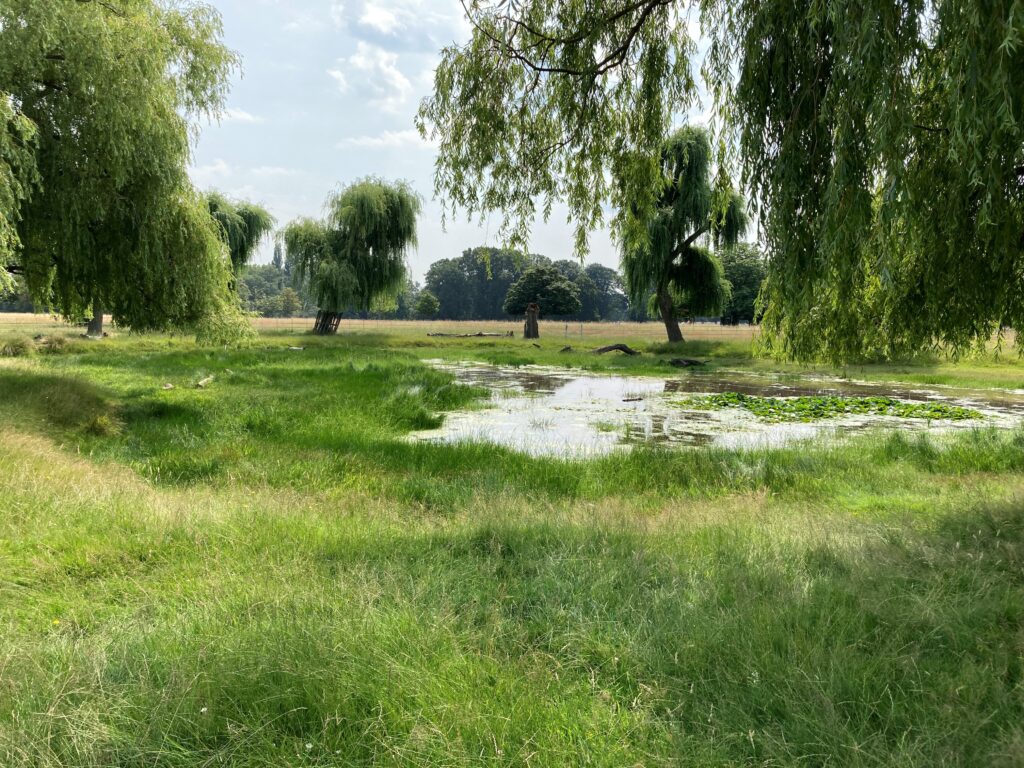
a small pond in the middle of a grassy field with trees in a park
Deepened and clay-lined Hampton Hill Pond, Bushy Park
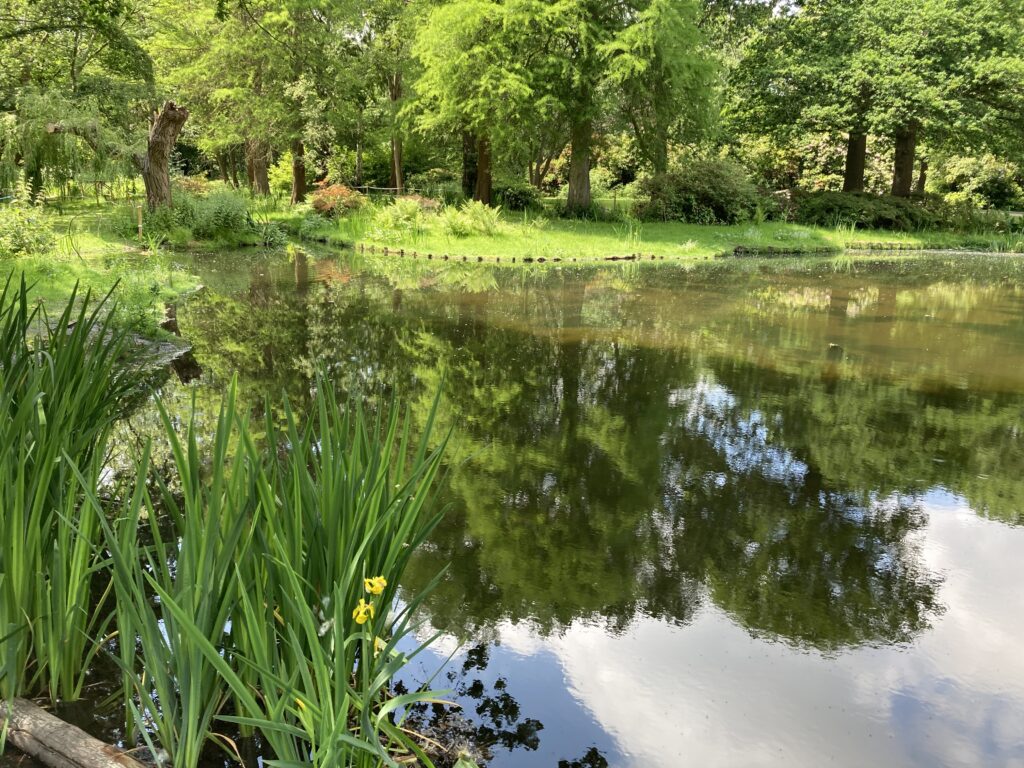
vegetation along a pond and trees on the other side of the pond in a park
Desilted Fisher’s Pond, Bushy Park


Hyde Park green infrastructure

In 2019–2020, The Royal Parks completed two green infrastructure projects to help improve Hyde Park’s resilience to climate change through habitat creation, flood control, as well as providing other benefits such as filtering out air pollution and improving access to nature for park visitors.

A swale was constructed in partnership with Transport for London in the north of Hyde Park, forming a sustainable drainage system. This takes surface water runoff from North Carriage Drive during periods of high rainfall, reducing surface flooding and discharge into the drainage system. The swale design includes a series of weirs to slow the flow of the water and create a series of pools, allowing the water to slowly infiltrate into the soils. The swale also contains gravels, sands, and vegetation to help filter out pollution in the water. The swale has been planted and sown with a range of native wildflowers, creating a range of habitats to boost biodiversity, from wildflower-rich grasslands on the bank tops and surrounding the swale, damp grassland on the swale banks, and pond and pond edge habitats at the base, accommodating varying water levels in response to weather conditions.

In addition, a newly constructed catering hub in the Hyde Park Nursery includes a living roof. This extensive brown roof has a shallow substrate and is sown with a wildflower seed mix suitable for a roof’s drier conditions. This feature provides a relatively undisturbed wildlife habitat within a busy urban park, whilst also helping to filter air pollution. The vegetation and substrate also retain water during periods of rainfall, regulating the amount of water reaching the drainage system and helping reduce downstream impacts.

a swale and vegetation fenced up in a park
The new swale, Hyde Park
  • logo of The Royal Parks

We only use strictly necessary cookies, cookies that are required for the operation of our website. Carry on browsing if you're happy with this, or find out how to manage cookies on our Cookie Policy page.