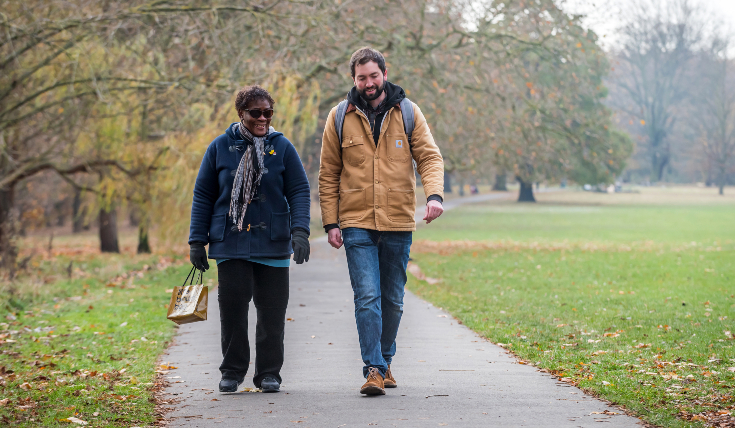
Access to quality parks and green spaces is of vital importance for our health and well-being as well as protecting and enhancing the environment. The pandemic has highlighted just how important these spaces are to us but has also shown that not everyone has equal access to them. If we want to address inequality of health, we need to address inequality of access to quality green spaces with sustainable investment, which can be woven into existing strategies to boost public health, learning, skills and formal education. This has to be done alongside action to reduce climate changing emissions; and to restore England’s deteriorating wildlife and natural habitats and people’s lack of contact with nature.
Friends of the Earth have just published a new report England’s green space gap – How to end green space deprivation in England (September 2020). The report uses official data to map the availability of green space for people living in neighbourhoods across England for the first time. Analysis of the data reveals a marked disparity in green space availability, a strong correlation between green space deprivation and ethnicity, and a correlation between green space deprivation and income.